
How can I be sad when I have breakfast, lunch, and dinner?
Continuing on the egg train! 🪺 🥚 🍳
So my little sister visited me in May, and around that time we like to celebrate a little holiday we made up where we exchange gifts and tell each other "Happy not-a-Mother's day!" I gave her some Pokémon cards, and she gave me a few packs of my absolute favorite MAMA instant noodles with gue diao粿條 - rice noodles.
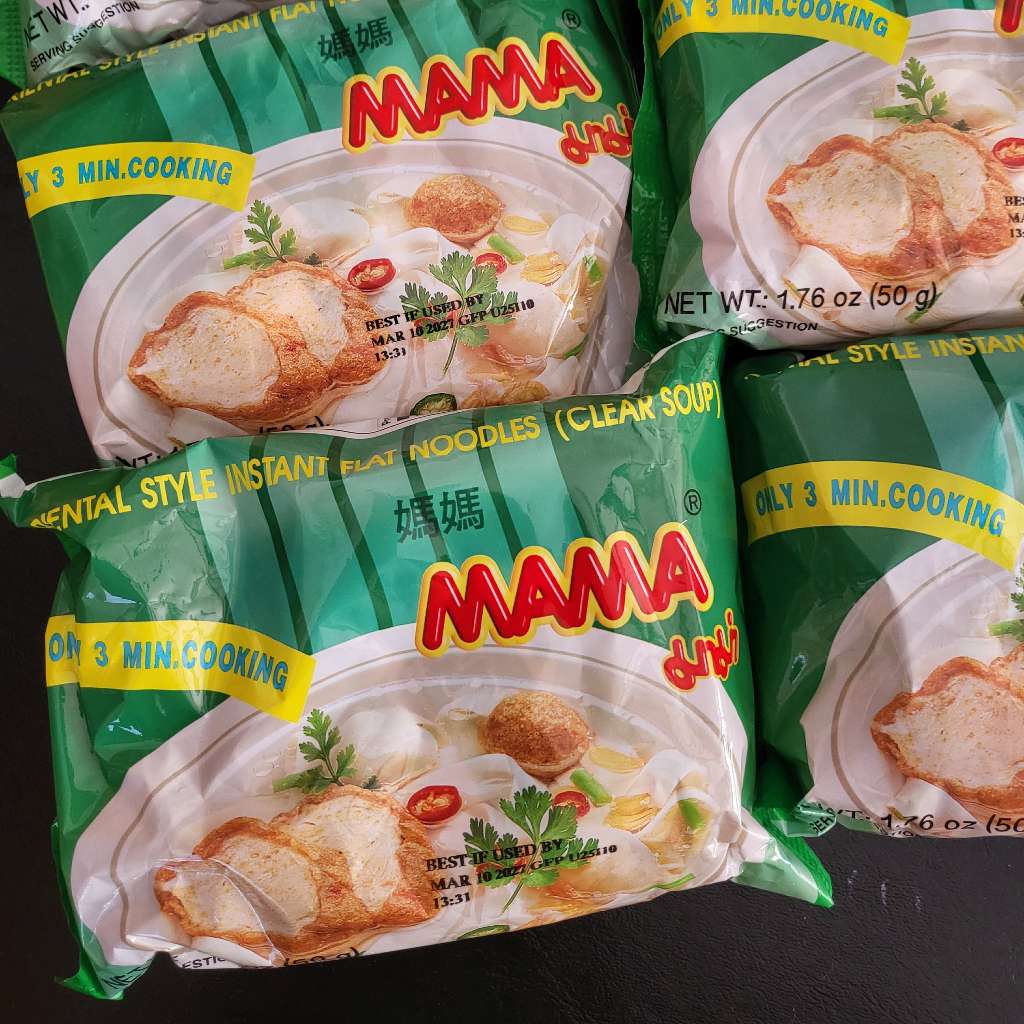
My dad would always keep these stocked in his apartment, and when I went off to college he sent me a huge box full of them to keep in my dorm room. They were my go-to noodles, and I would always eat them with an egg. As an adult, I don't eat instant noodles too often, but there was one time last year that I thought, I could really go for some Mama mi.
I know it's not actually mi麵 - egg noodles, I just find it rolls off the tongue to say Mama mi
Unfortunately, most Asian grocery stores do NOT stock these! I mean they're not impossible to find like ou nam烏欖 - Chinese black olives, but at least 9 out of 10 Asian stores aren't going to have them. I would know. I look for them every time I'm in an Asian store.
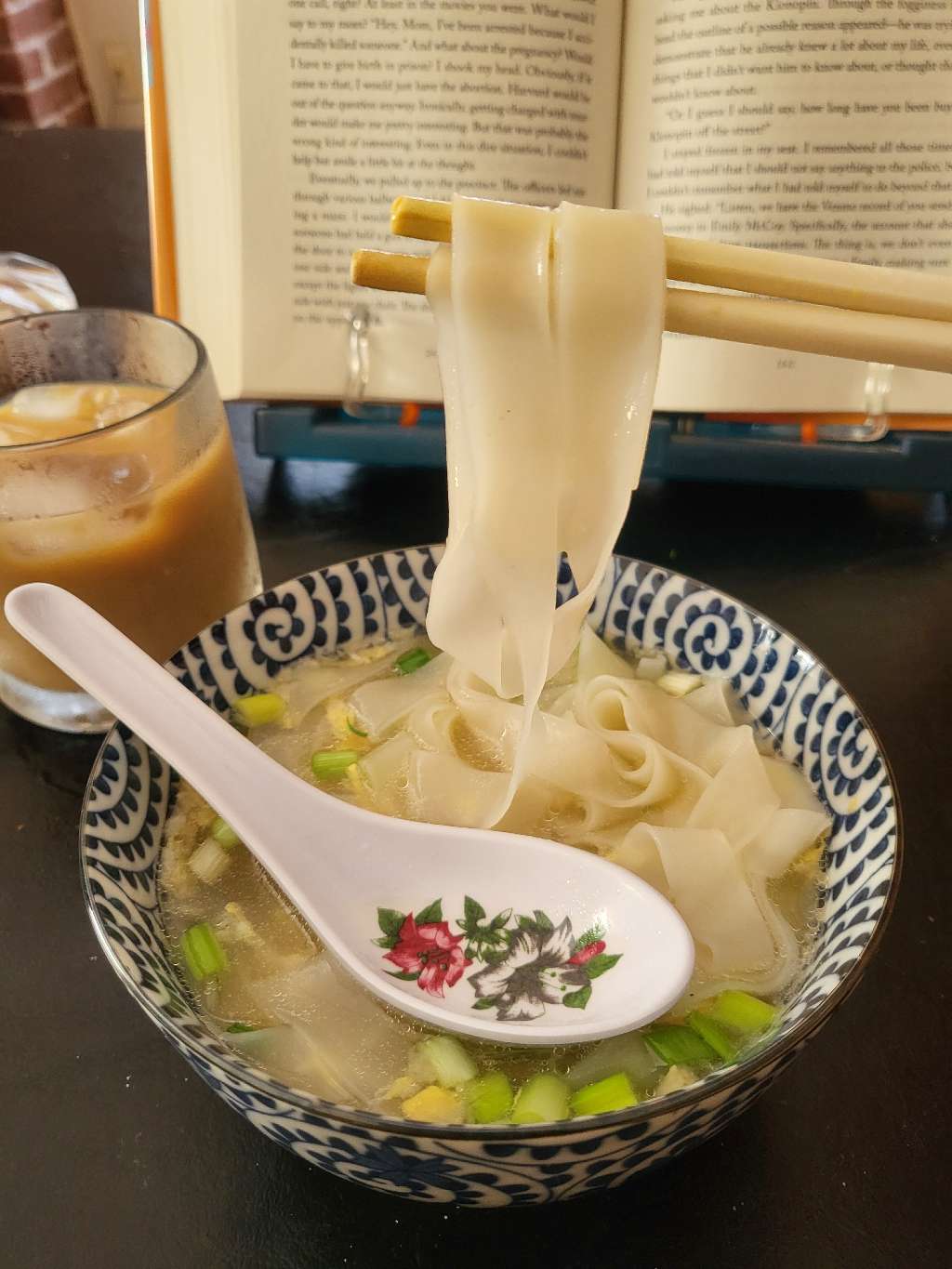
Sometimes I find a similar instant noodle with clear broth, but it has the thin noodles instead. It's the same flavor, so it tastes good, but man, it does not hit the same as the wide, flat noodles.
The noodles come with a seasoning packet, an oil packet, and a spicy packet. Now when I eat something like Buldak, I always use all of the spicy sauce, because I gotta have the full spice-inducing experience. With these Mama noodles, I don't use any of the spicy stuff. I'm not trying to struggle here.
I mostly follow the package instructions. I boil about 1.5 cups of water, and I throw the noodles in and stir them around until they're soft. You do want to give them a good stir because I find that it's very easy for rice noodles to stick to each other. Then I crack in my egg and do some more stirring, and finally I add the oil and seasoning and turn off the heat.
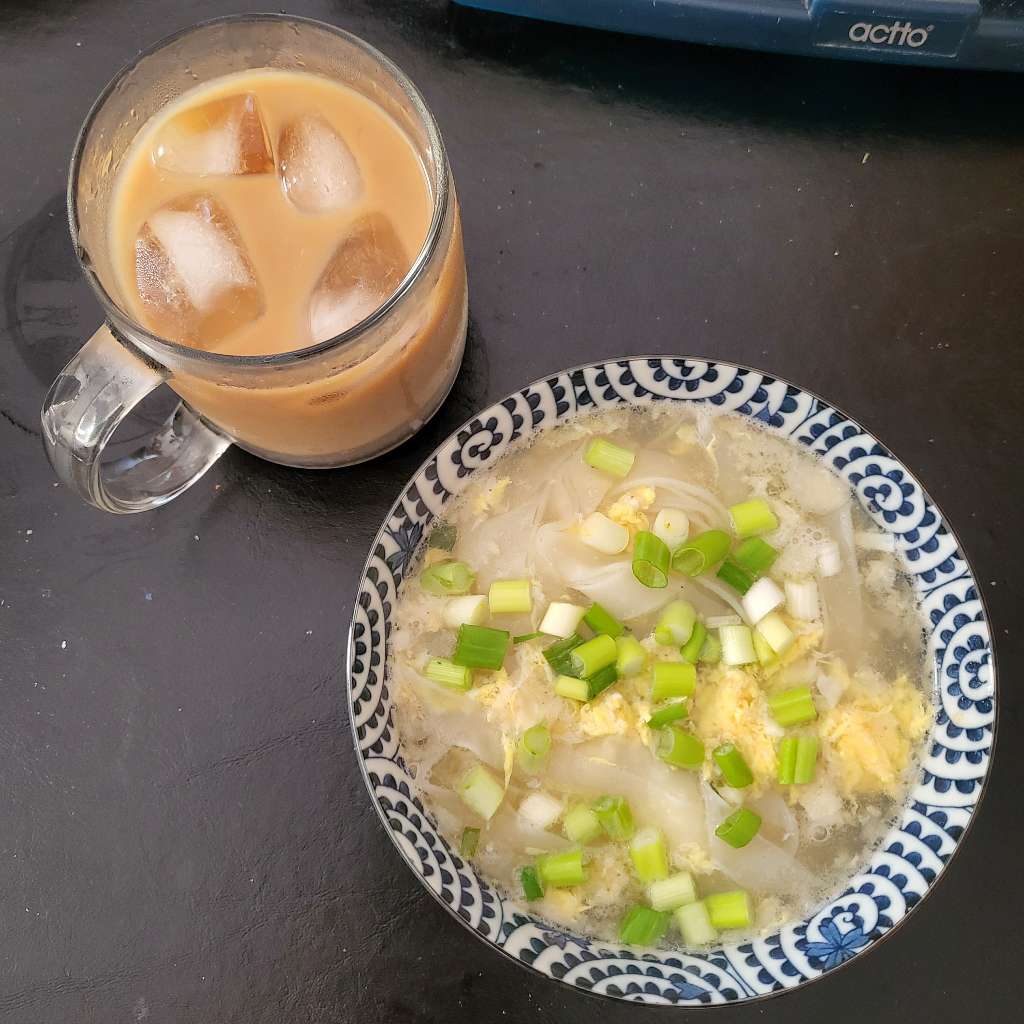
If I have a scallion in my fridge, I usually cut that up and throw it on top as well, because it gives me the illusion that I'm making this healthier and because it makes the dish look prettier. And then I eat this one spoonful at a time, making sure to put a noodle, some egg, some scallion, and some soup, all in each bite. So comforting and so good.
As I was putting the final touches on my previous blog post, I went to go add an "eggs" tag and I realized...I didn't even have an eggs tag yet 😯 But I eat eggs all the time. I thought that I must have had many entries that feature eggs, but I really didn't. So I gotta add more!
My go-to breakfast is beung pue neung飯配卵 - rice with eggs. I never ever ever get sick of it, because who could ever get sick of eggs?! There are also so many ways to cook eggs that I'd still have lots of variety in my meals if I only ever had rice with eggs for breakfast.
My mom made fried eggs for me a lot when I was a kid. You just heat up a pan on high, add some oil, and then crack a couple of eggs. Well, my mom cooks it on high. I turn the dial to about a 7 or an 8 if I'm feeling risky. High heat will give you this really nice crispy edge, but I fear too much for my own safety. Do you know about the time I burned my leg in high school? That was from me trying to cook this very dish.
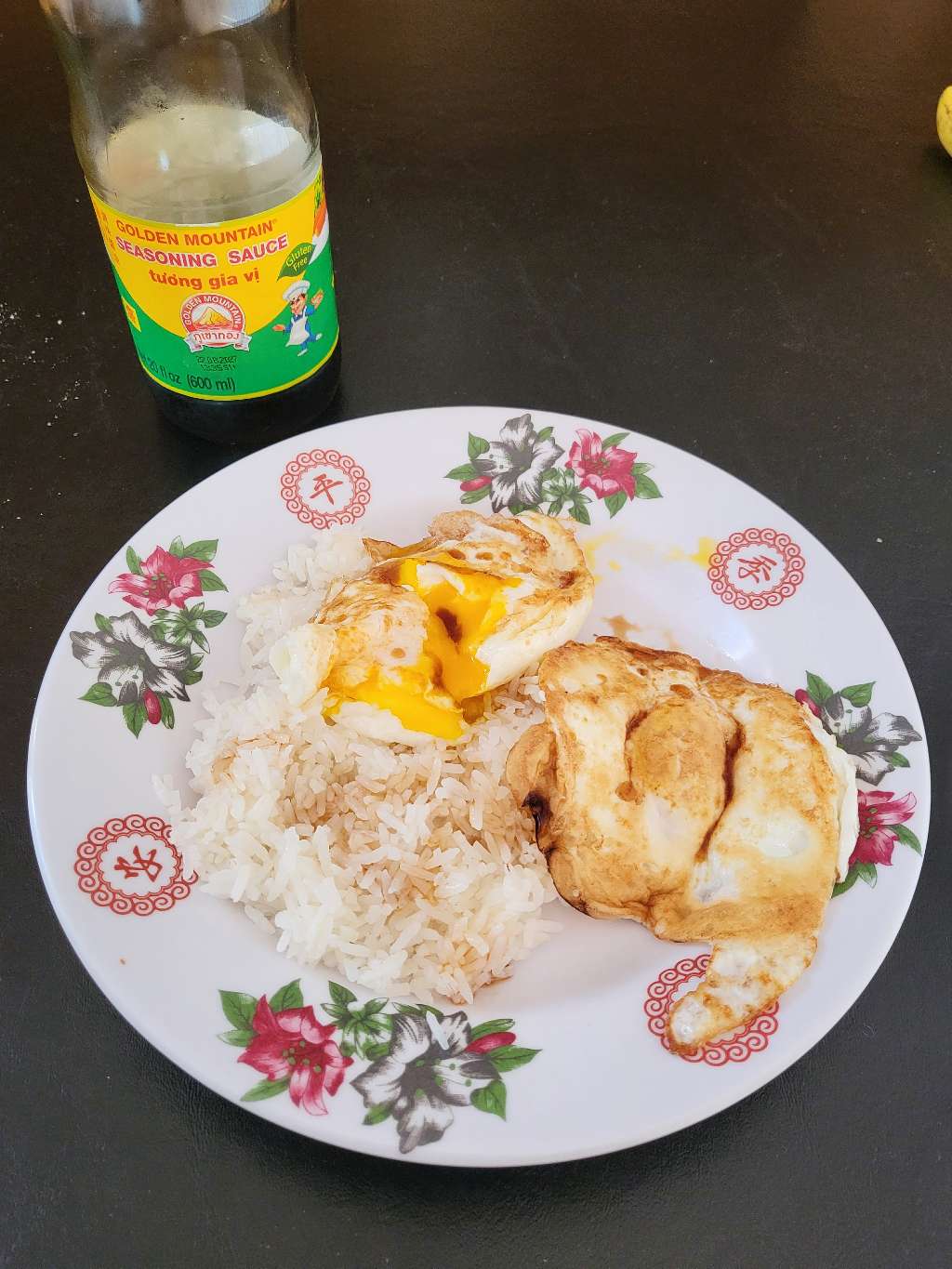
We always drizzle si iu豉油 - soy sauce on top, but not just any soy sauce, Golden Mountain Seasoning Sauce. It's actually not even labeled as soy sauce at all. I was so in shock when I learned this in college.
A much safer way to cook eggs is to scramble them because then you're supposed to use low heat. Of course that takes way too long, so I'm still cooking my scrambled eggs at a 7. I'm also really basic when it comes to scrambled eggs. All I mix into them is salt, and maybe pepper if I'm feeling spice-y.
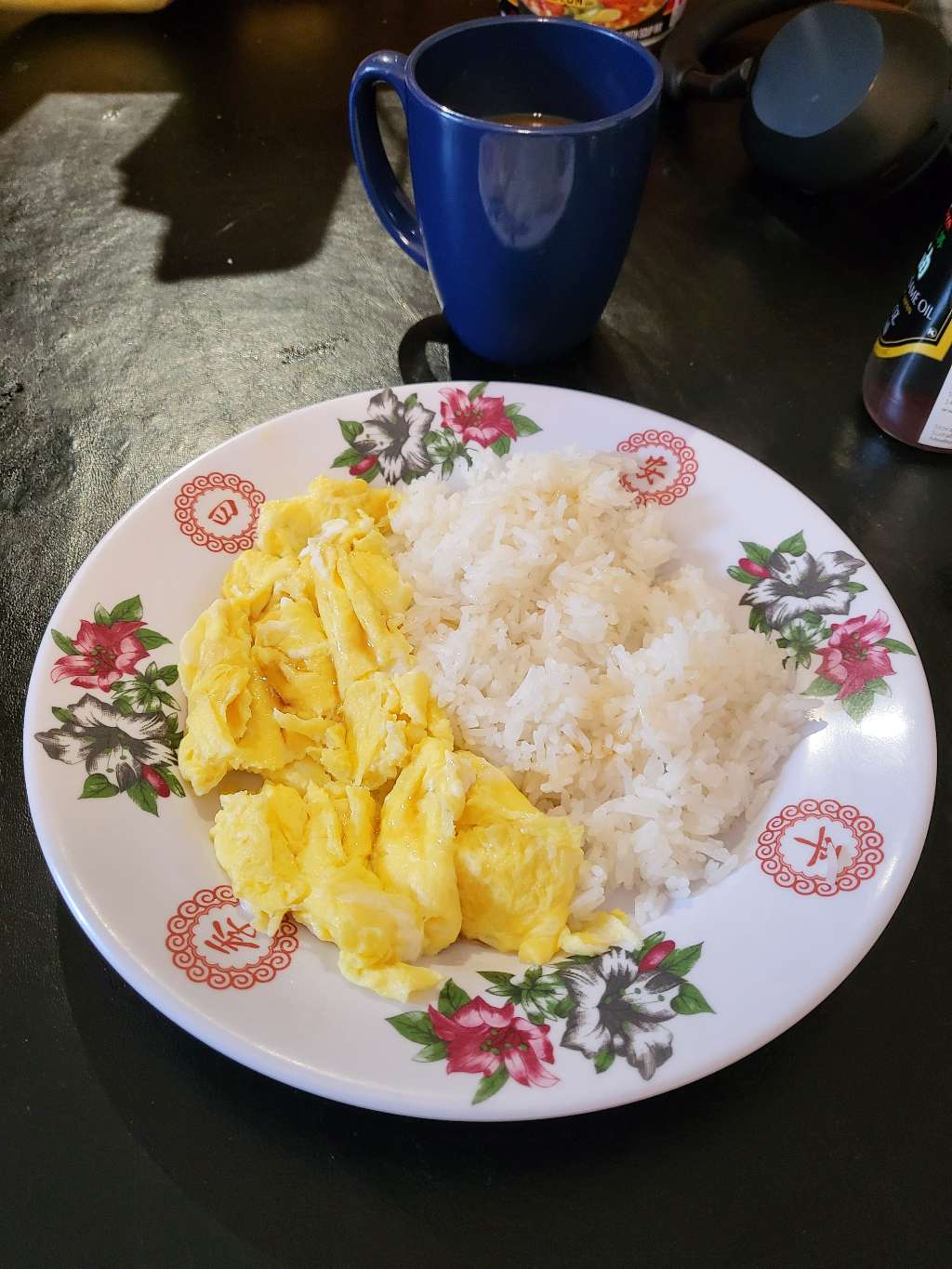
I did get a little inspired by this Jimmy O Yang video, and now I always drizzle sesame oil on my scrambled eggs. I actually used to not be a fan of sesame oil, but something changed when I started pouring it over my eggs and now I'm putting it on all my Asian foods.
So I know I've shared photos of marinated boiled eggs in the past, and I'm usually putting them on some type of noodle soup, but I also really like to eat these with rice! (And some giam chai鹹菜 - pickled mustard greens if I have it)
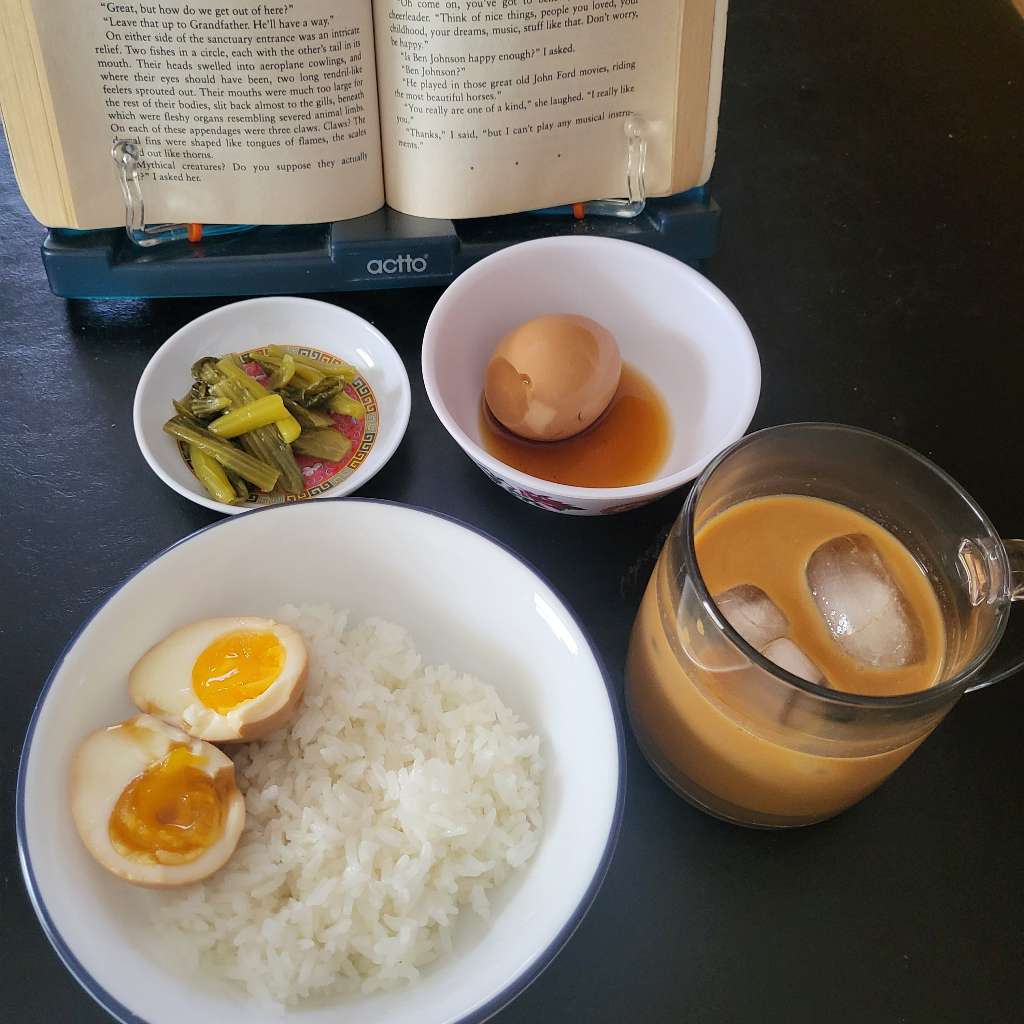
I know there's a lot of different methods for hard/soft boiling eggs, but what works best for me is to:
I've used a few different recipes for the marinade in the past, but recently I've been making a lot of these Quick Marinated Eggs from Omnivore's Cookbook. It uses five spice, and I'm still trying to get rid of it. Honestly, I can't even tell that there's five spice in this. But whatever, it's delicious.
Frying, scrambling, and boiling eggs are all methods that I've been familiar with for years now, and I probably would feel content enough with just those, but any time I see a new way of cooking an egg I gotta try it. So when I saw Kenji's video on Tamago Gohan, I was like "I NEED TO TRY THIS." Plus all I had to do was mix. That's super easy.
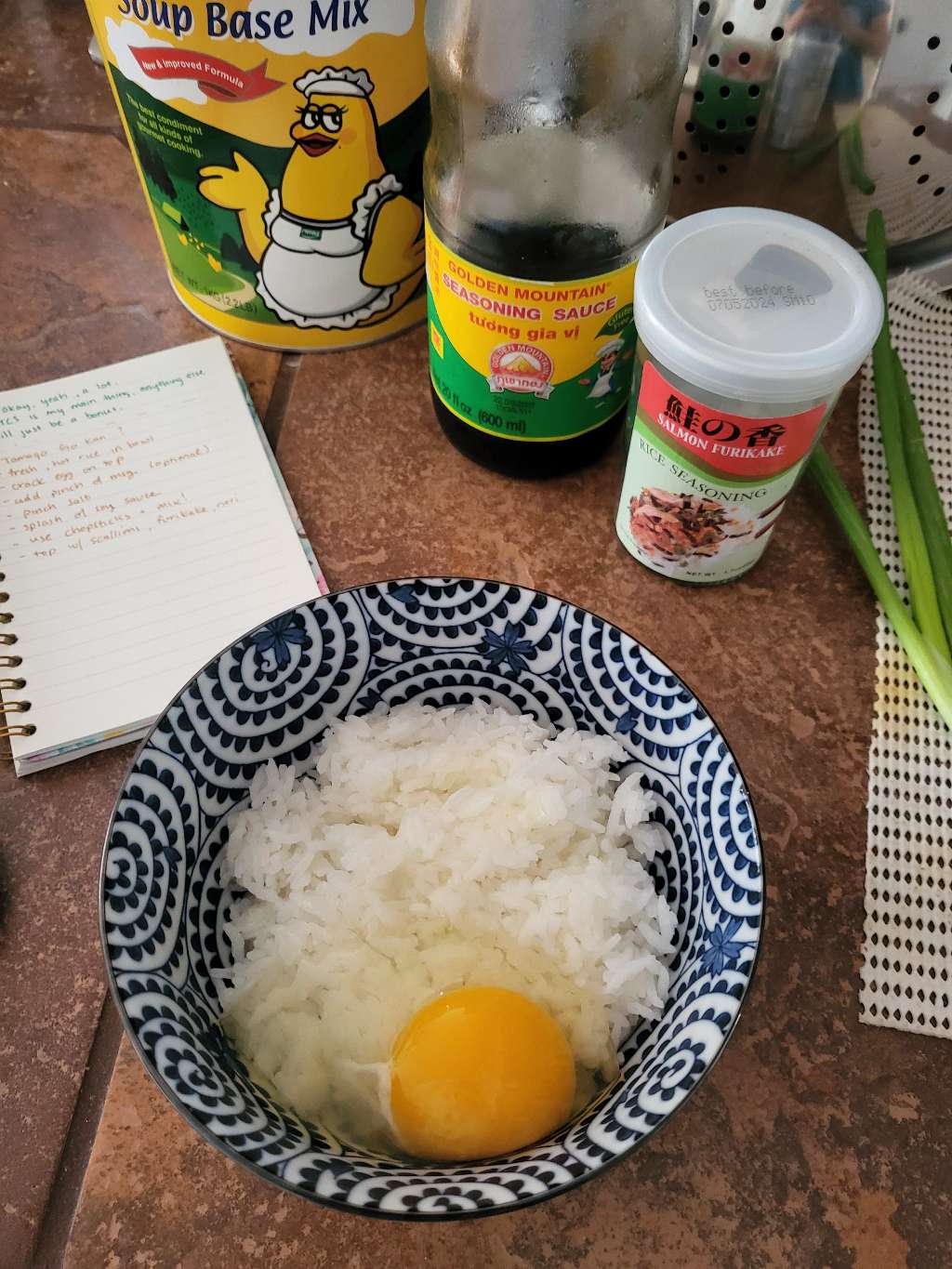
Okay, I guess I'm not even really cooking the egg in this. But you don't have to convince me to eat a mostly raw egg. If some knowledgeable person on the internet tells me it's safe, then I'm eating it.
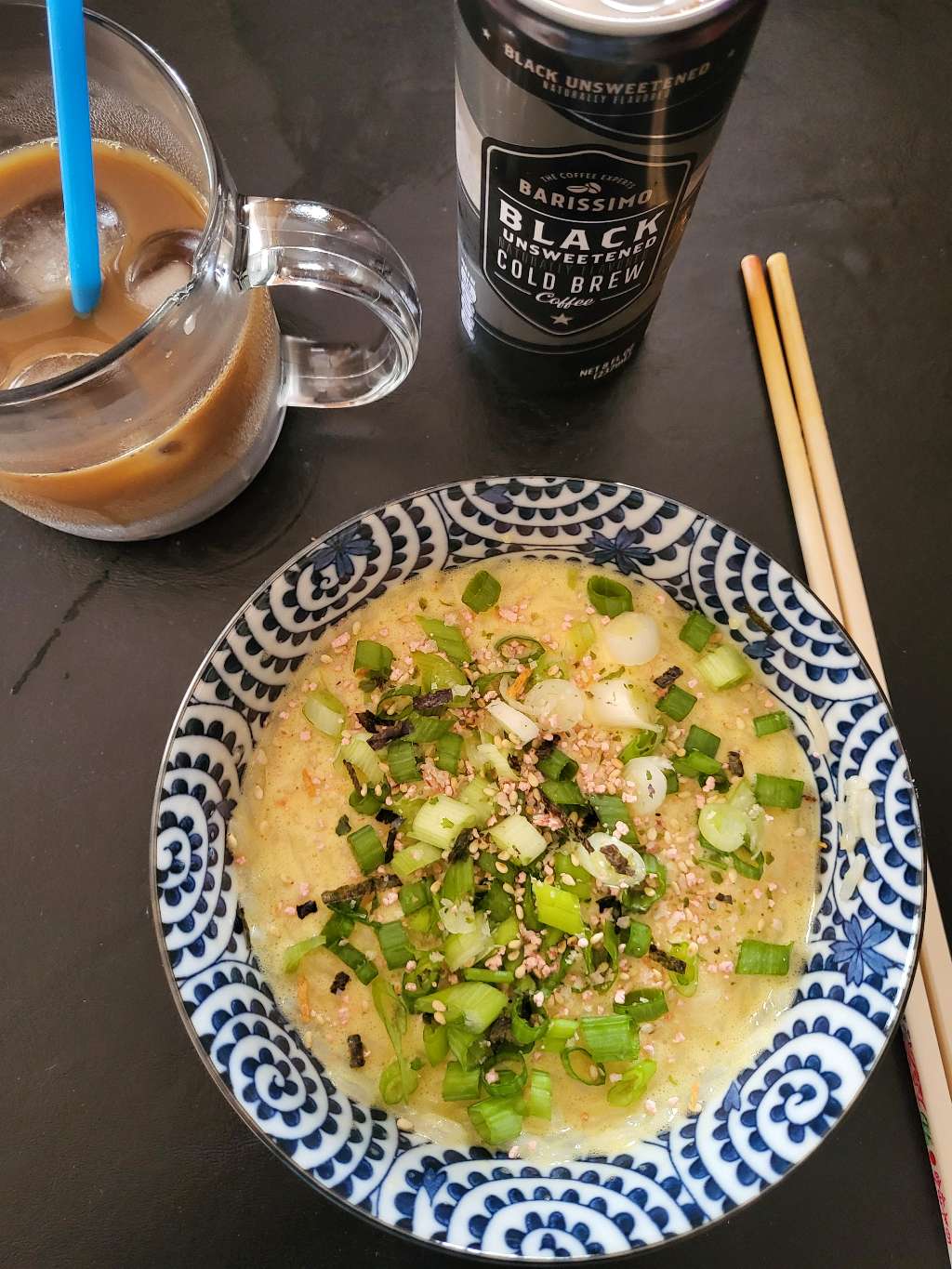
I'll be honest, while I did enjoy eating this, it's not my favorite. I think I like my eggs to stay mostly eggs rather than being so incorporated into the rice. I guess this makes sense, I don't even like omelettes because of the extra stuff in them.
So that was the easiest, quickest egg rice, and this last one is probably the most involved.
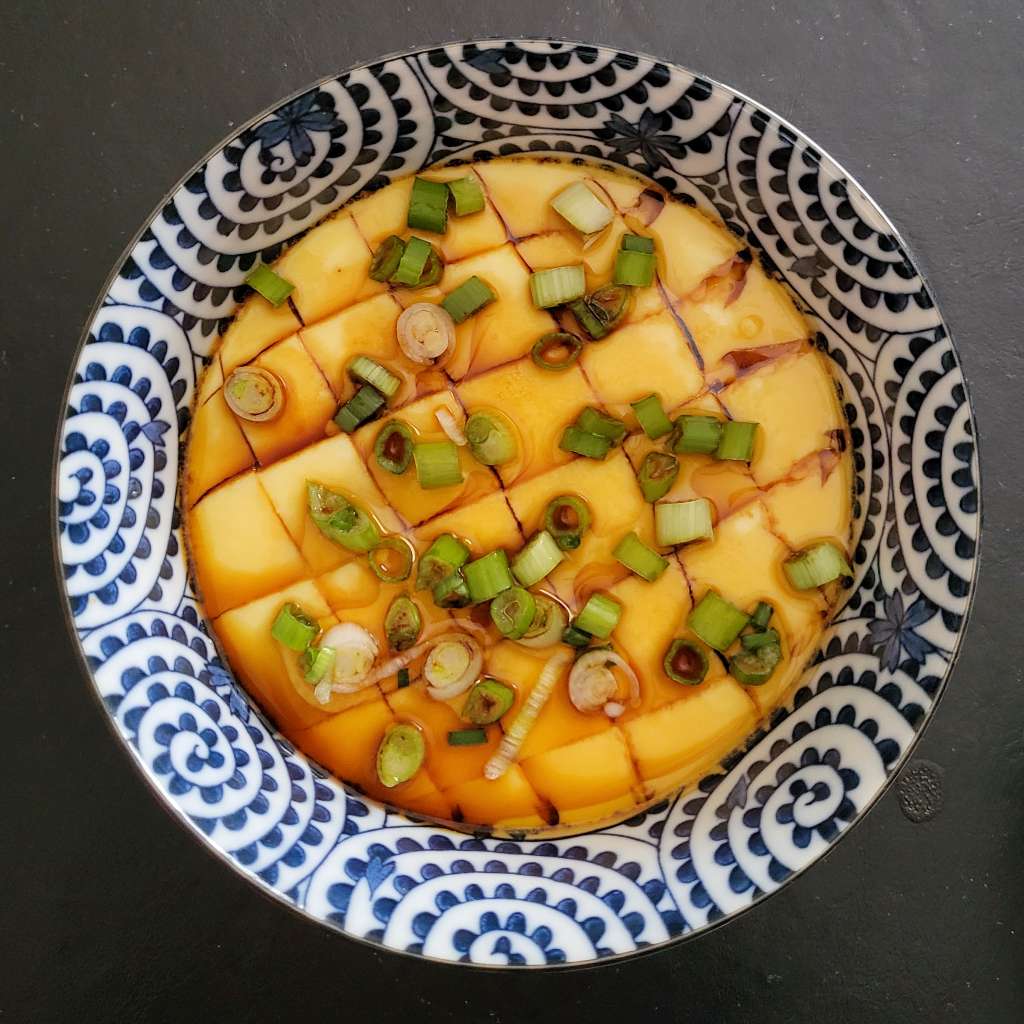
I started seeing shorts by Nutrition by Kylie on my youtube feed, and she had a video on steamed eggs, which she says is one of her favorite things to make. I made it, and it could be one of my favorite ways to eat eggs, but I gotta say, it's a little too involved to ever be one of my favorite things to make.
I tried making it again later, and I took some shortcuts, like using the microwave instead of properly steaming it.
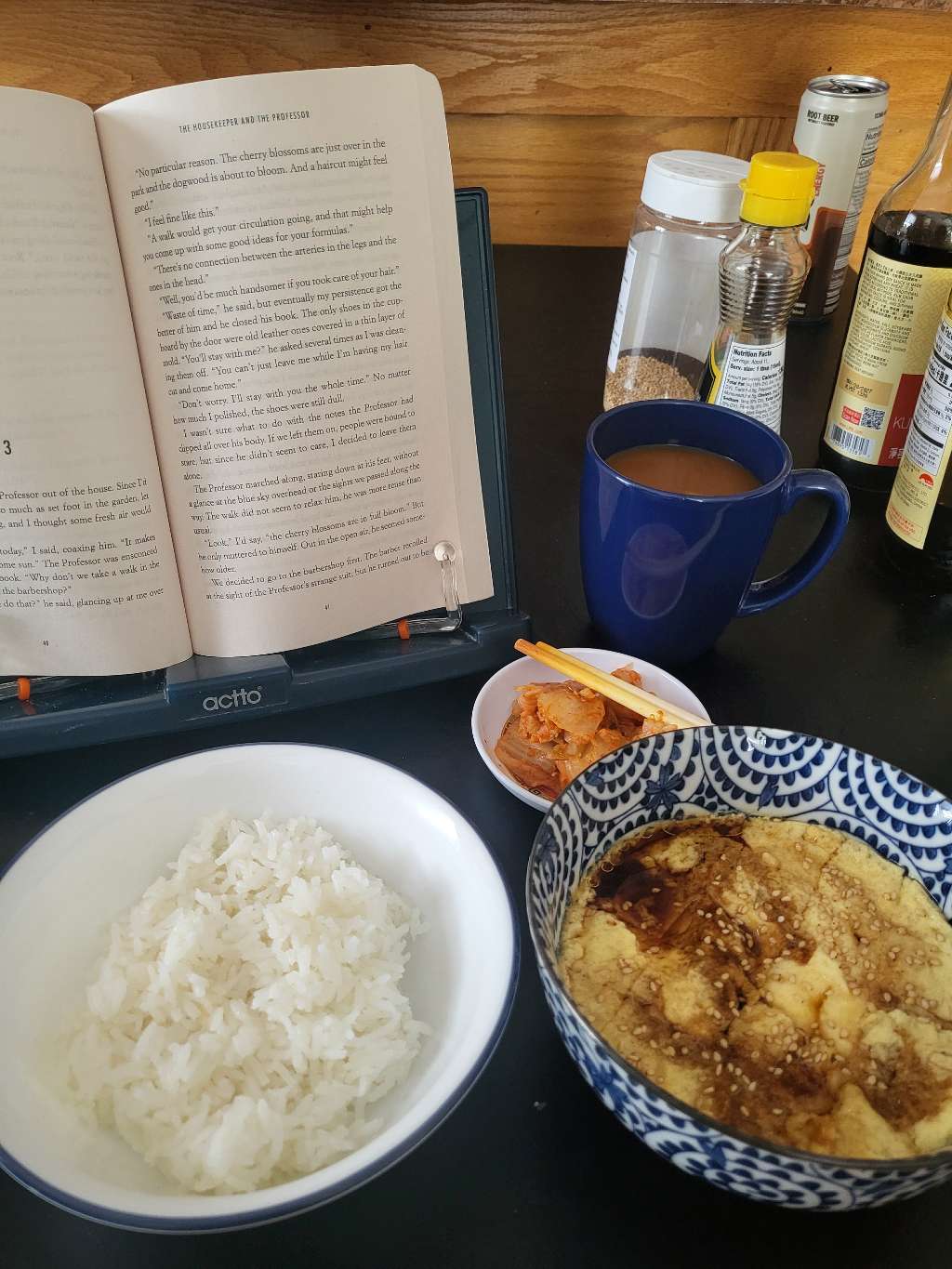
Yeah, it was not nearly as pretty and did not have that silky smooth texture. Still tasted good, but it's definitely worth doing all the steps.
But there you have it! Five different ways of enjoying rice and eggs. Some of them I make more than others, but they're all part of my breakfast rotation. Do you have another tasty way to prepare eggs and rice? Please let me know about it!
Hello! You probably noticed that my blog looks different! About a year ago, I asked my friend bogo if he could make some fan art for the blog. I didn't really give him any guidelines, except that I wanted eggs in it, and I think he did an amazing job!
I wanted to incorporate this art on the website, but it also felt like the whole site needed a facelift. Recently, I've grown to really dislike the color green. A few people know why, and if you don't, feel free to ask me about it. It's just the type of thing that I don't want to air on the public internet 😬 But the old design had lots of green, and I wanted something very not-green.
Speaking of eggs, one of my friends told me that if I have some heavy cream, that I could use it to fry eggs, and he told me to look up Kenji's video on fried eggs. Well, for some reason I had leftover heavy cream, and I decided it was time to fry up some eggs.

I don't really have much to say about this, but I love eggs, especially for breakfast, and I love it when I find a new way to cook them. This was no exception. I don't think I would ever go out of my way to make heavy cream eggs because they're well, heavy, but it's great when I need to use up extra cream.
I paired the eggs with a slice of seedy, Bistro Multigrain Bread from Aldi. I'm usually not a fan of bread with all the extra seeds and grains in it, but I really like this bread from Aldi! Sometimes I just toast it and drizzle some extra virgin olive oil and salt on it.

I keep telling myself I need to stop staring at my phone so much, so I've been trying to read during breakfast. This was from February and I was in the middle of reading The Three Body Problem. It was...alright. Tune in next time to see the book I'm currently reading!
Back in March, I had attended a wedding, and one of the appetizers were these cute little veggie spring rolls. I thought they were delicious, and it made me want to make some spring rolls of my own.
I remember telling my aunt I made some chen nem生ណែម - fresh spring roll, and she said something like
leu jiah chen nem汝食生ណែម - you eat fresh spring roll?! in the winter?!
And I had to tell her, it's spring! It literally became spring that week!
Well, maybe it was technically spring, but it was actually still so cold for the next month and a half, so I guess Soy Go細姑 - small aunt was right to call me out on that.
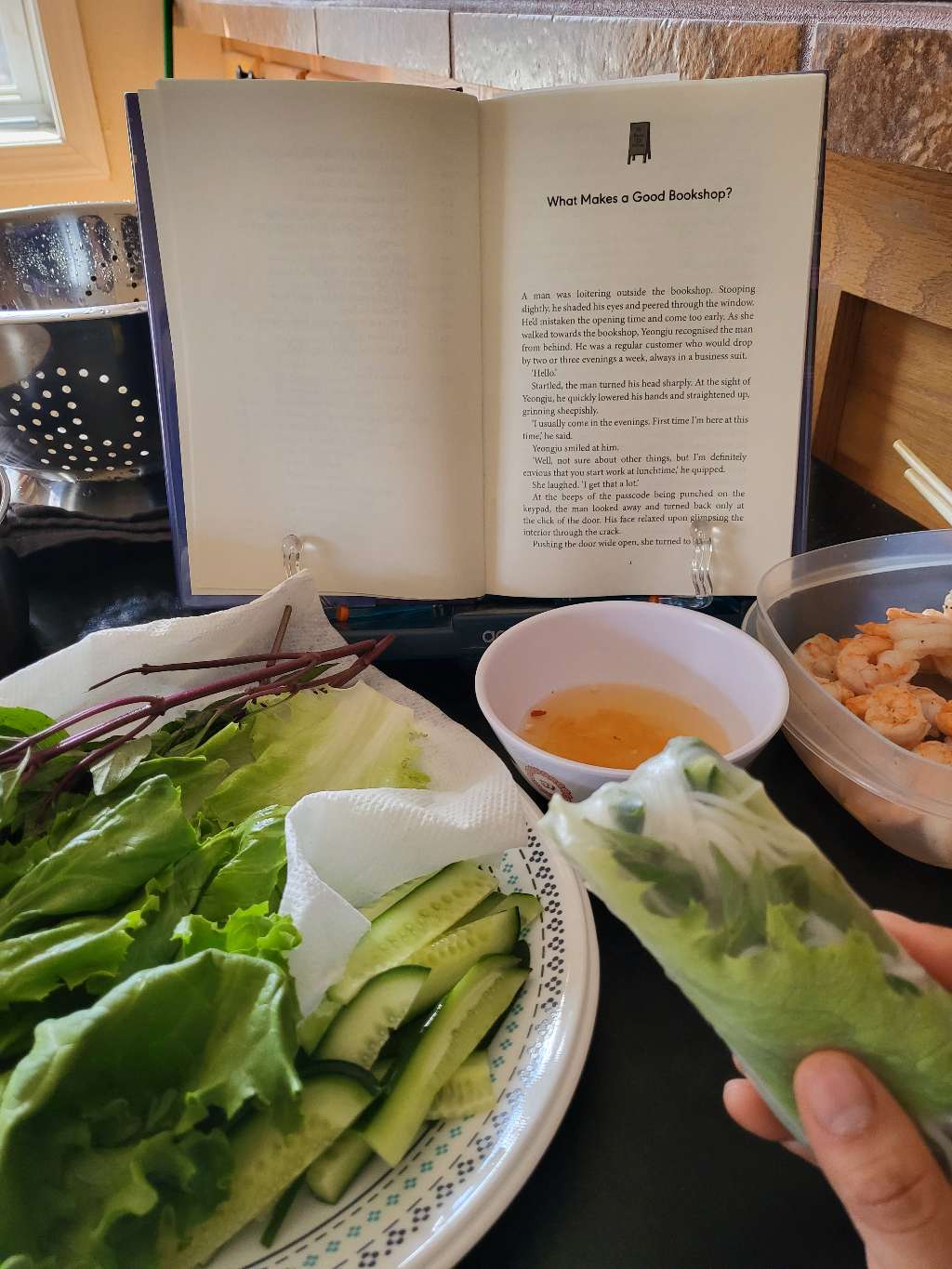
When my family makes spring rolls, we typically add both pork and shrimp, but I was a bit tired right after that wedding trip, and I didn't want to make things too gang kou艱苦 - difficult for myself, so I opted to just include shrimp. (Yes, shrimp is the easier of the two!)
But after I finished all my shrimp, I still had more spring roll wrappers left, and I didn't want to make even more shrimp spring rolls, so I decided that it was time to cook some pork.
I often will go the easy route and just boil and slice some pork belly, but Soy Go has a special pork recipe that involves toasted rice. Remember when I had spring rolls every day for pre-dinner snack? Well, I did learn how to make the pork! When Soy Go first explained it to me, she made it sound like it was sooo easy.
It's not. Spring rolls themselves are already a lot of work, and this pork makes it a whole day affair for me. And I was actually feeling kind of sick recently and I did not want to make cooking more of a hassle. Buuut I guess my desire to eat this pork took over, and because of that, now YOU can learn how to make this pork too!
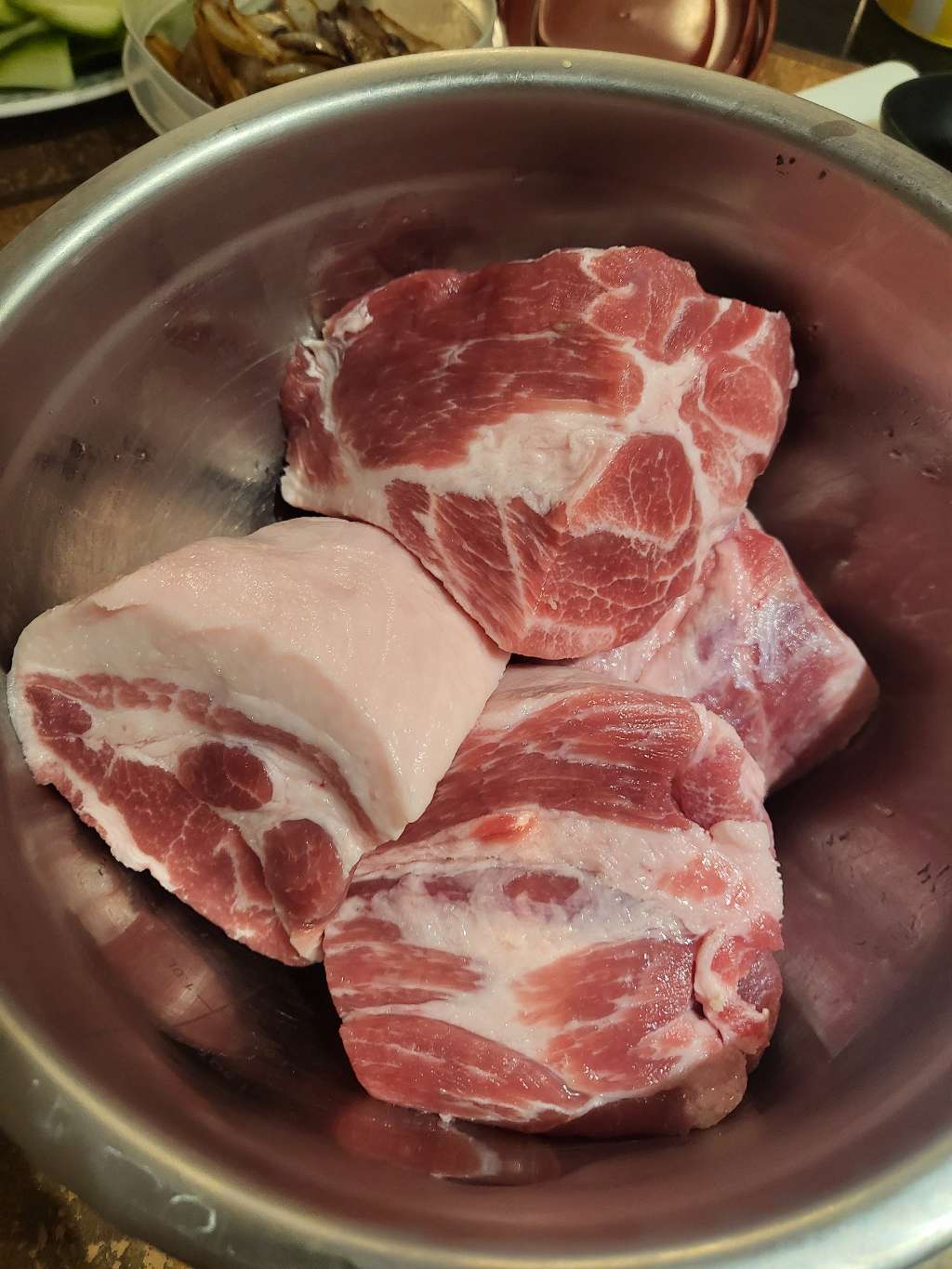
Anyway, I grabbed about a 3 lb chunk of pork butt from Aldi and I got started. In order to get more flavor into the pork, I cut it up into large chunks and then I salted the chunks for at least a few hours before I cooked them. But I'm still not sure if this extra step makes that much of a difference.
Next I needed to make the toasted rice. I would say that if you have sticky/sweet rice, definitely use it! But most of the time, I only have a big bag of Jasmine rice so that's what I used. For this amount of pork, I scooped out about 1/4 of a rice cooker cup, washed that, and then cha炒 - stir fry on a dry pan on medium heat.
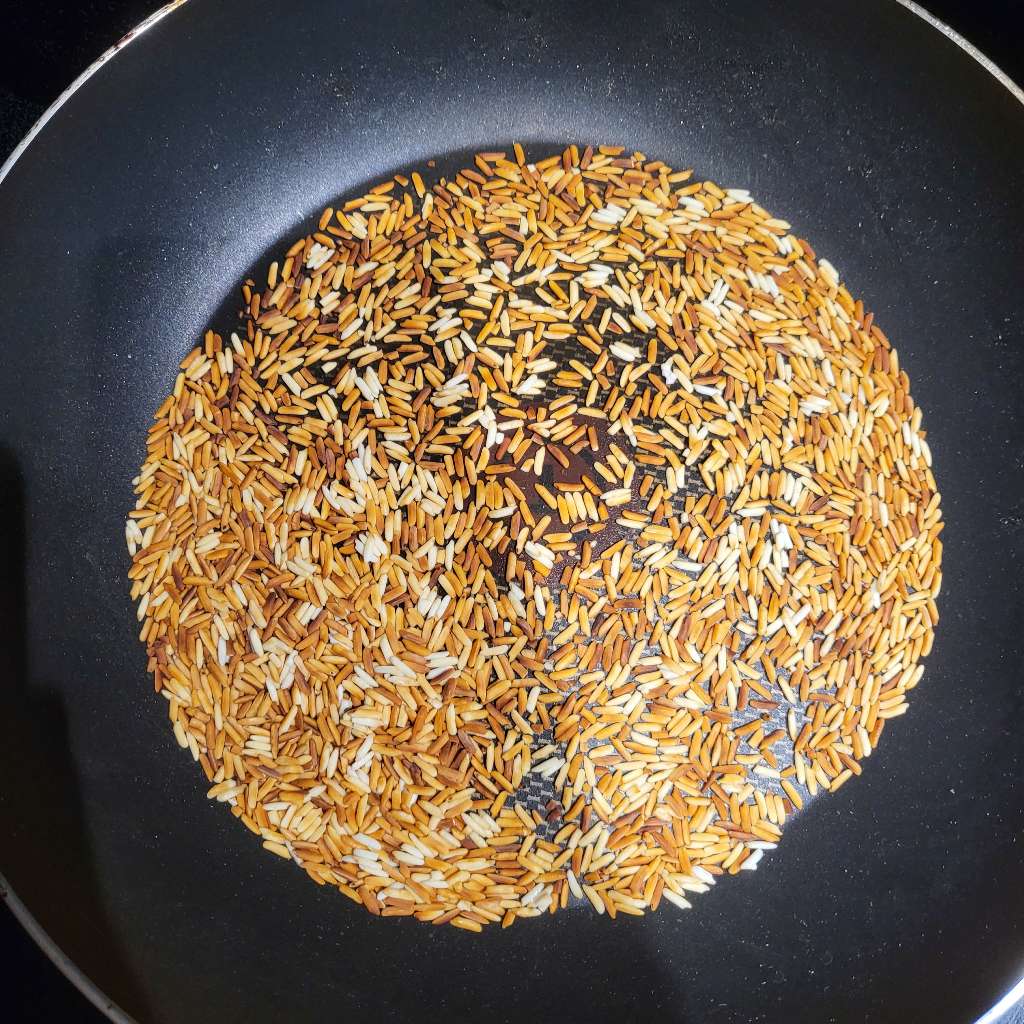
Then I toasted it until it was chiah chiah sek赤赤色 - golden brown! Once that cooled a little, I threw it into my Nutribullet and blitzed it up into little pieces.
And then it was time to cook the pork. I boiled 2.5 quarts of water and added a healthy pinch of salt and sugar. I ended up using 1 tbsp of salt and 1.5 tbsp of sugar, but honestly I think it could have used more of both. I plopped in the pieces of pork and let it boil for 5 minutes before turning the heat down to medium low, and then I let it simmer for 30-45 minutes, occasionally skimming out the impurities that float to the top.
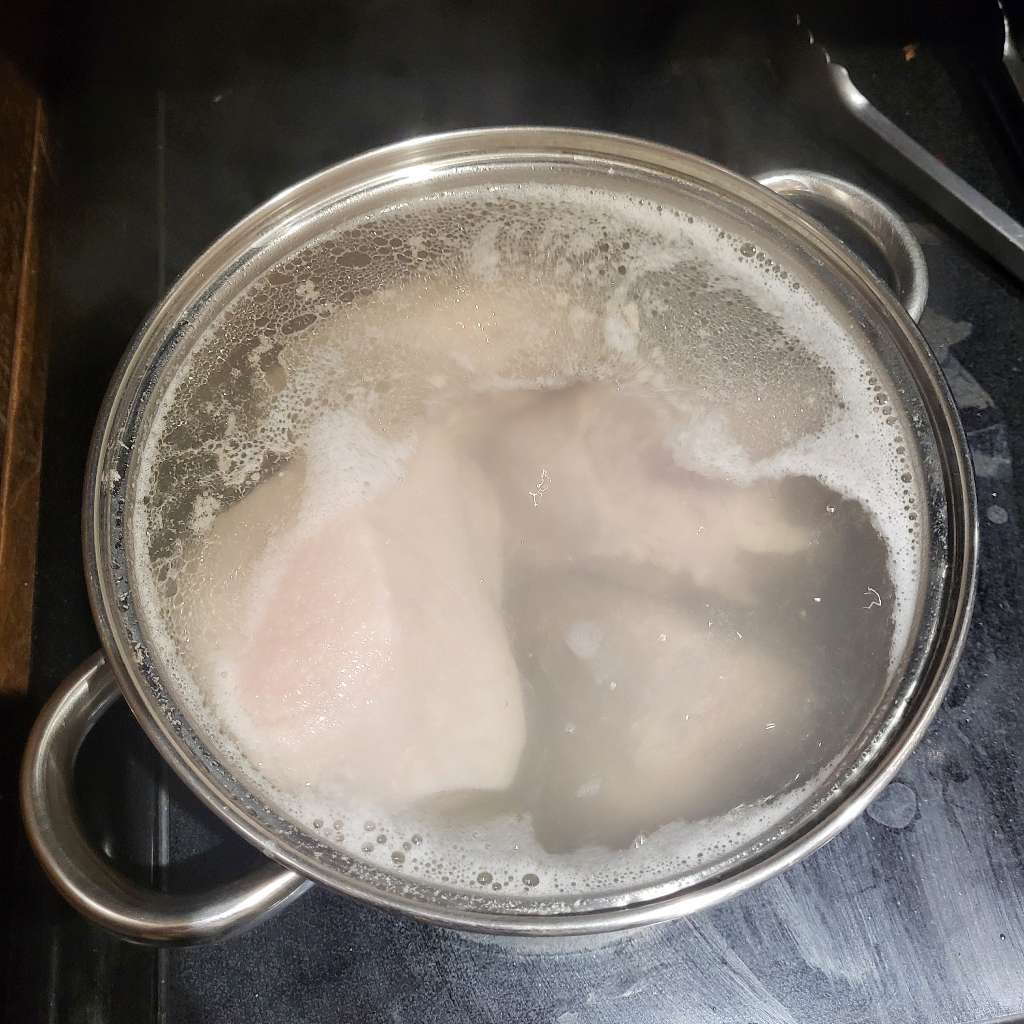
To see if the pork is done cooking, you can take a chopstick and poke at it and see if blood comes out. That's what Soy Go told me, but I just kind of cut into it to see if it looks cooked. If it's still a bit tough, you can also cook it for longer. Once it was at my desired tenderness, I sliced it up into bite sized pieces.
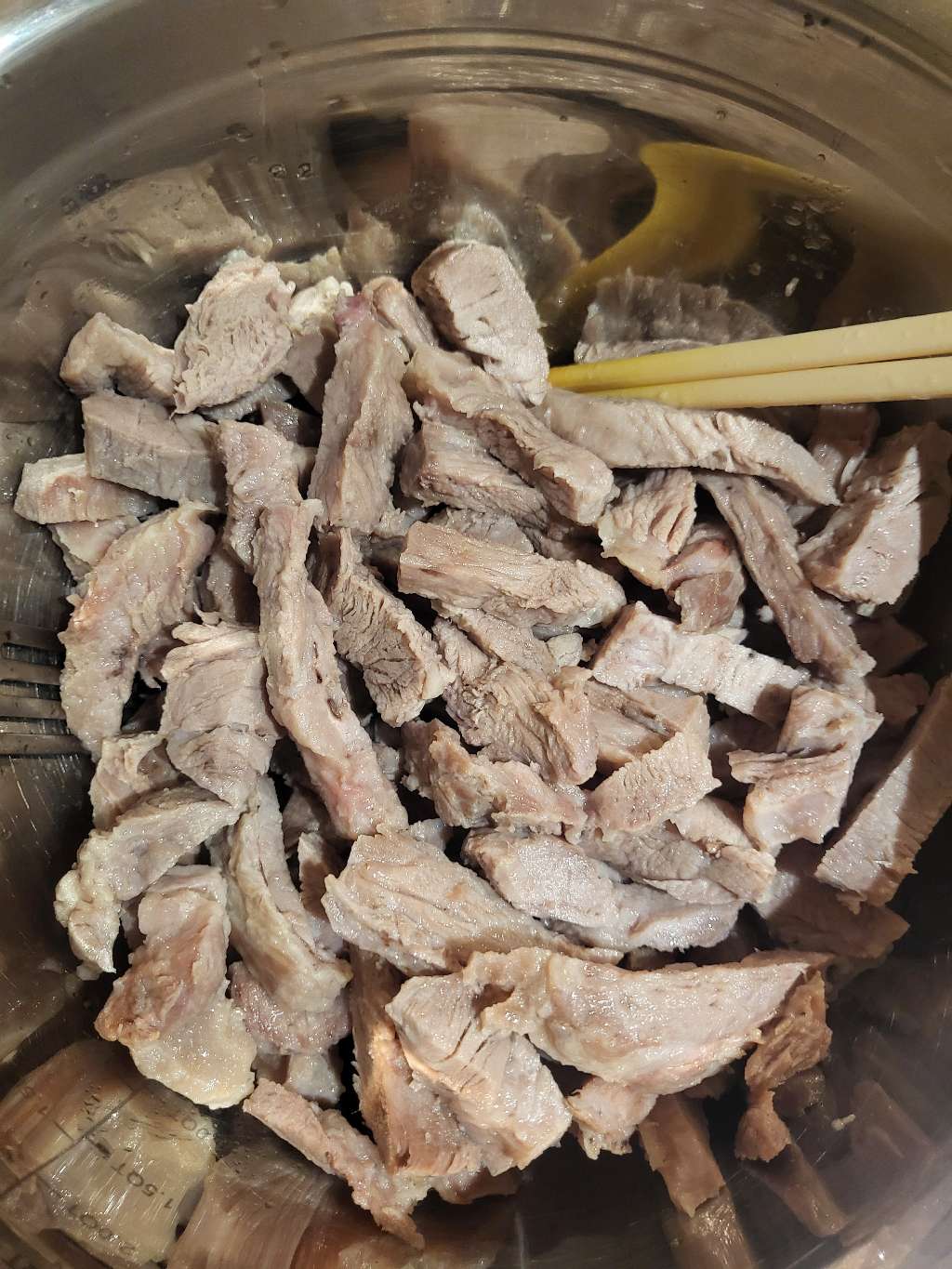
And finally, I seasoned it with the toasted rice, salt, sugar, and goi jeng雞精 - chicken bouillon to taste.
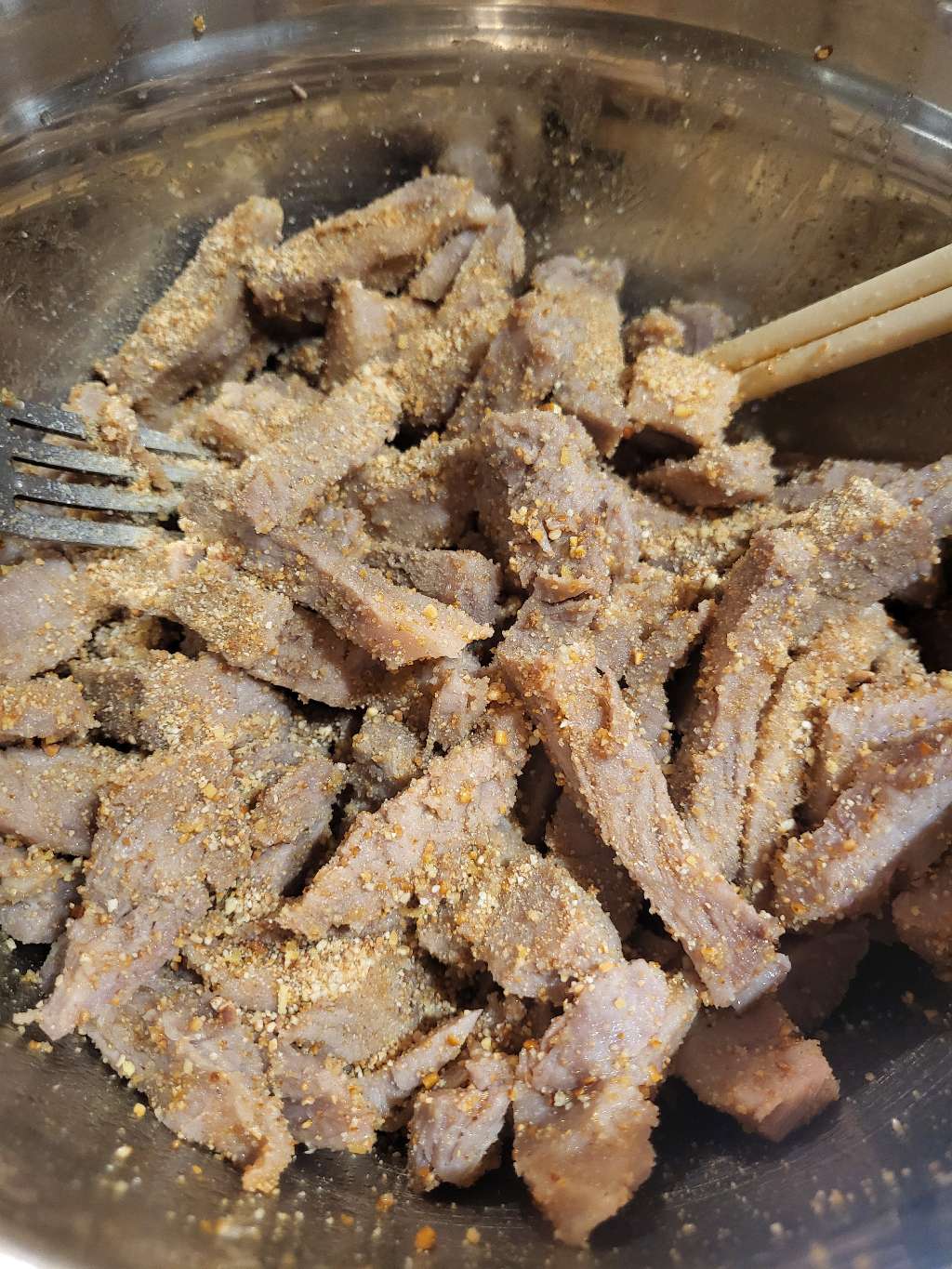
I like to put these in my spring rolls! The toasted rice bits make it so fun to eat. My aunt also told me to save the water that the pork cooked in, to bu beung煲飯 - cook rice in it or something. I decided to make some soup with it. I made this Napa cabbage and tofu soup recipe, but I used my pork broth instead of chicken broth. It was very good!
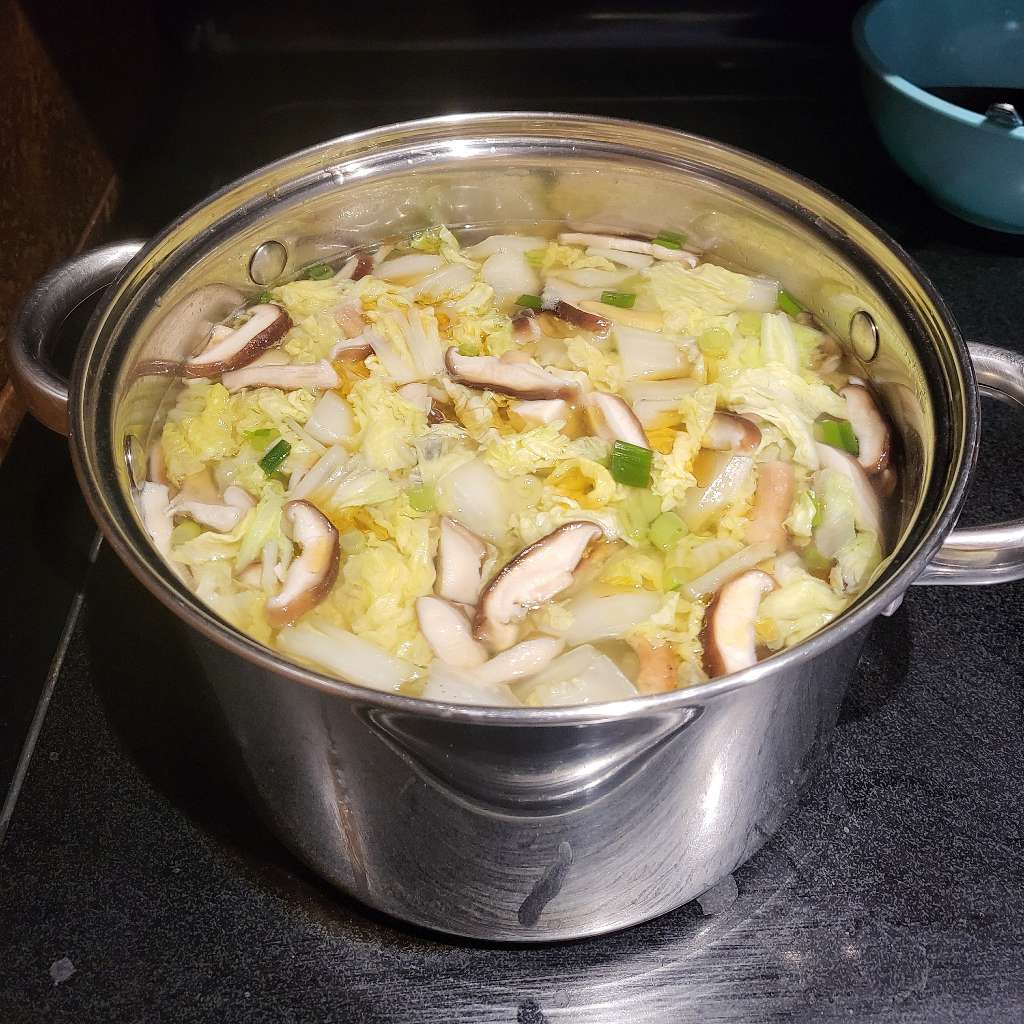
Speaking of slowly cooking, I spent a couple of hours making udon noodle soup a few nights ago. I think it was 11pm by the time I actually produced this bowl of soup.

Worth it. So worth it.
I wanted to make some udon noodle soup because I had gone to an udon restaurant a couple of months ago, and at the time I didn't think I really wanted noodle soup so I got a rice bowl. But everyone else was ordering the udon noodles, and by the end of dinner, I really wanted those noodles.
It was also a little more appropriate a couple of months ago because it was colder. Now we're hitting 90° outside and it is definitely not soup weather anymore. But I don't care. I made the noodle soup and ate it three times and will eat it again twice more because I still have leftover noodles.
I don't know if this is normal or not, but whenever I eat noodle soup, I like to make a nice little spoonful for every single bite. A little bit of noodle, some soup, a couple of other garnishes on top, and a wonderfully flavorful experience for my mouth.
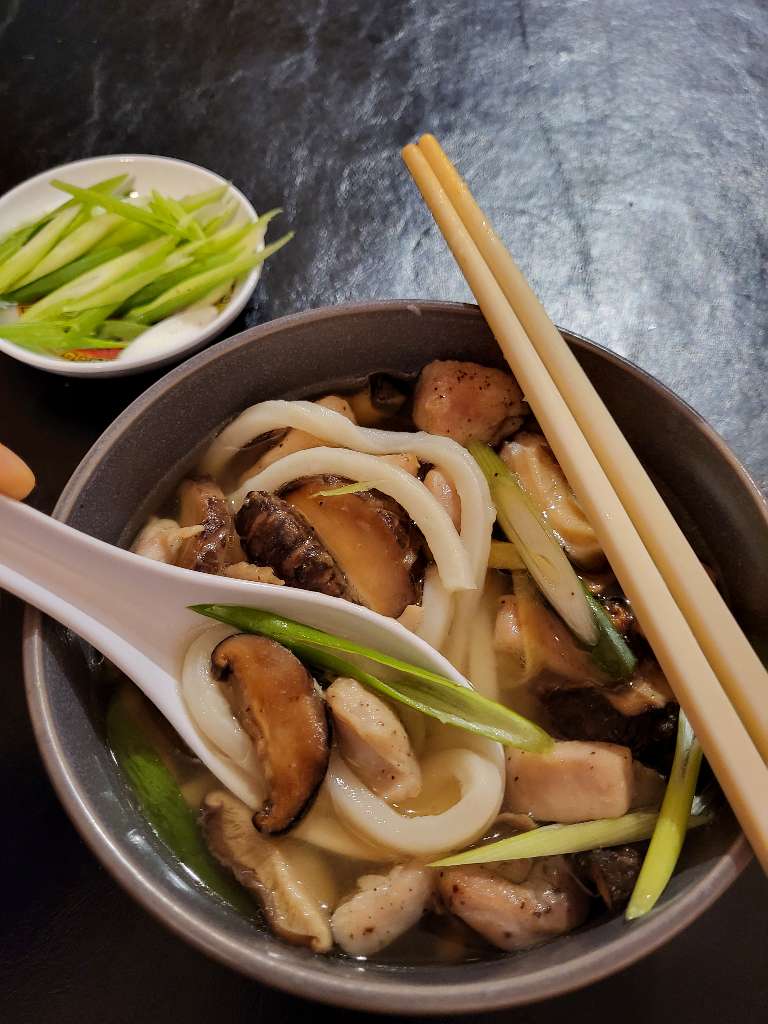
I actually don't think I've ever had udon noodles from a restaurant before so I have no idea how they're supposed to taste, and the Woks of Life recipe I used even explicitly stated that it's not really authentic. But it is delicious.
I do know that restaurants often put soft boiled eggs in their noodle soup, so I wanted to do the same thing. I've been using this ramen egg recipe from Just One Cookbook for a while and it's always been great. I figured it would be really easy to make a few eggs to throw in my bowls of soup.
But I figured wrong. Holy crap I have never struggled so much in my life to peel boiled eggs. The ramen egg recipe calls for putting the eggs directly in boiling water, but I thought it would work just fine if I put the eggs in cold water and brought it to a boil. When I stopped cooking them and tried to peel one, it all broke apart and every piece of shell I tried to remove just ended up removing more of the egg white. I don't think I initially cooked them for long enough so I boiled more water and tried to cook them longer, but that was still a fail.

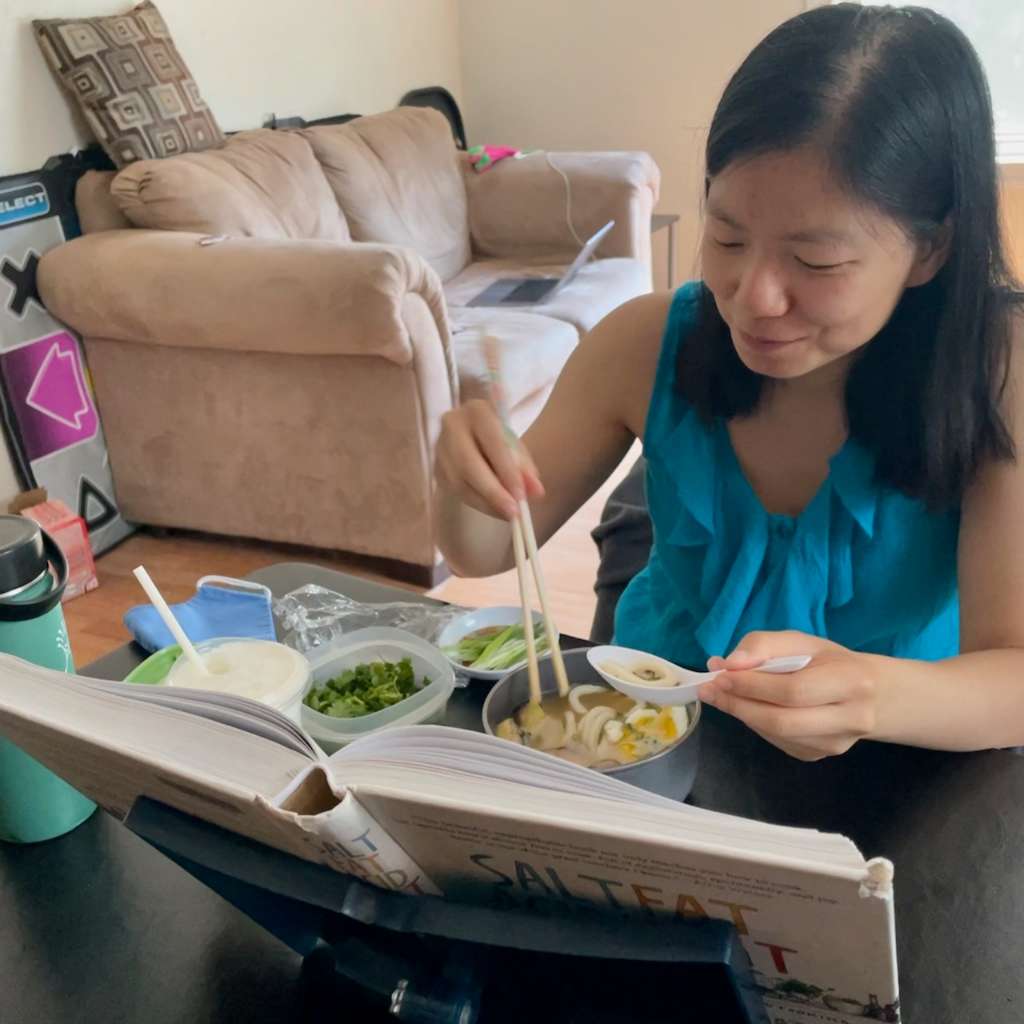
I can't end on a fail though, so I did some googling and was determined to make better soft boiled eggs. I made a few adjustments for the second attempt:
And it was a success! It peeled so easily! Incredible.

